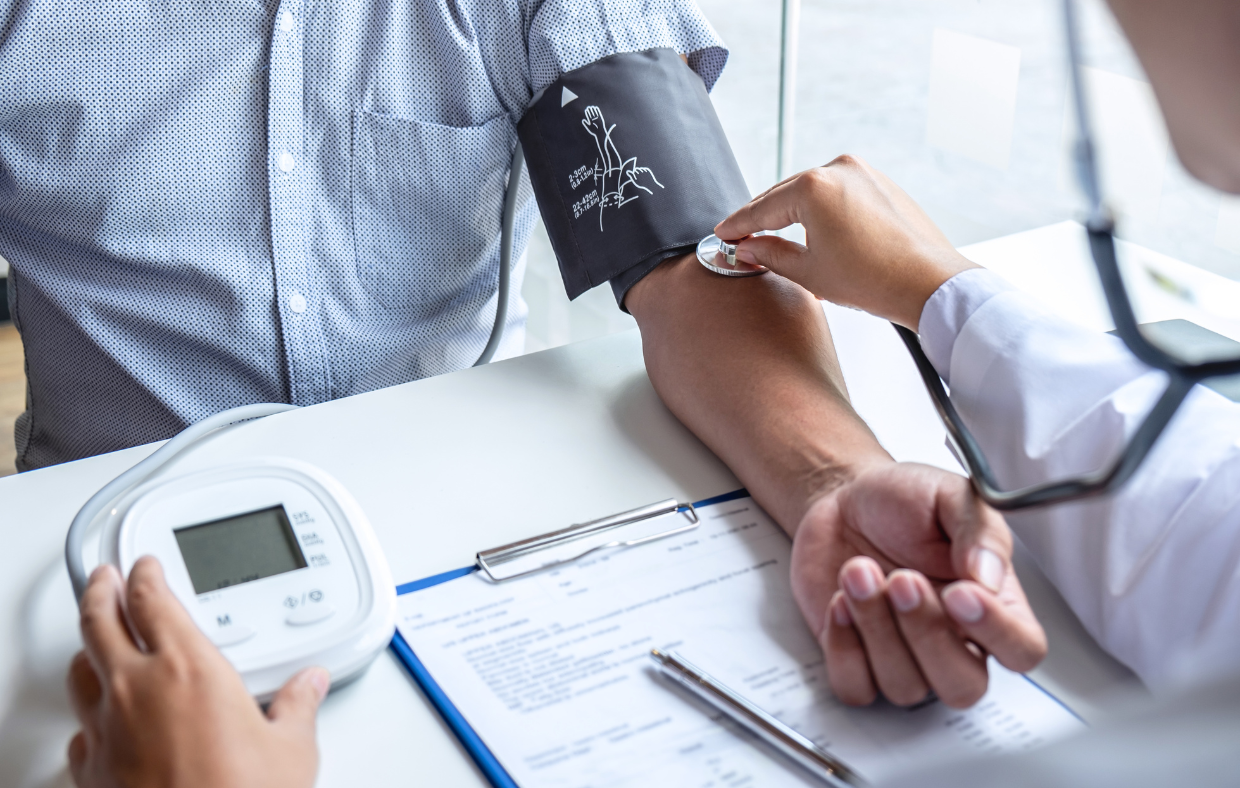
Hypertension, or high blood pressure, is a common condition that can increase the risk of heart disease, stroke, and other health complications. Regular monitoring and appropriate management can help keep blood pressure within a healthy range.
Common Symptoms
- Headaches
- Dizziness
- Shortness of breath
- Fatigue
- Chest discomfort
- Sometimes no noticeable symptoms
Diagnosis & Evaluation
Blood pressure measurements along with medical history and physical examination help assess hypertension. Depending on the individual's condition, the cardiologist may recommend blood tests, ECG, or other diagnostic investigations.
Treatment & Management
Management may include prescribed medications, dietary changes, regular physical activity, weight management, stress control, and regular blood pressure monitoring as recommended by the doctor.
Ongoing Care
Regular follow-up is important to monitor blood pressure and adjust the treatment plan when required. Maintaining prescribed medications and healthy lifestyle habits can support long-term cardiovascular health.
Diagnosis & Treatment Process
Initial Consultation
A detailed consultation to understand your symptoms, medical history, and individual healthcare needs.
Evaluation & Diagnosis
Our specialists evaluate your condition and recommend appropriate examinations or diagnostic tests when required.
Personalised Treatment
A suitable treatment approach is planned according to your condition, medical requirements, and overall health.
Follow-up & Recovery
Regular follow-up helps monitor your progress and supports recovery and continued care whenever required.
Why Choose Us
- Experienced healthcare professionals
- Advanced diagnostic and treatment facilities
- Personalised care based on individual needs
- Patient-focused approach to healthcare