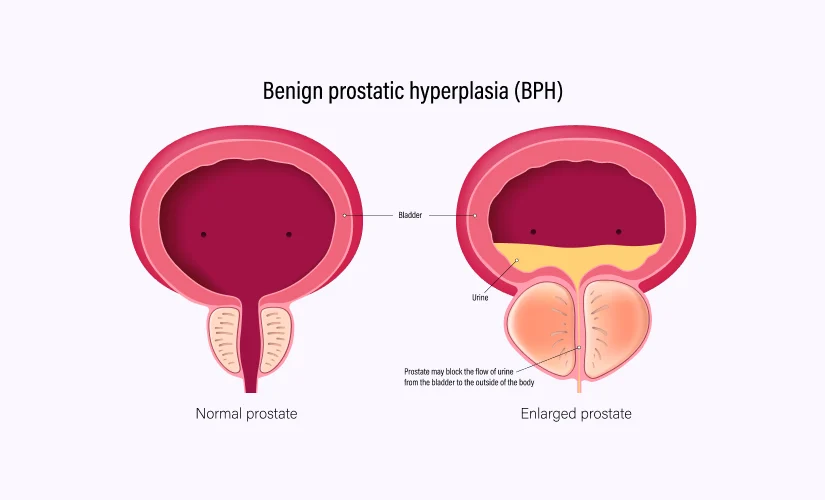
Benign Prostatic Hyperplasia (BPH) is a non-cancerous enlargement of the prostate gland that can affect urinary flow, particularly in older men. Proper evaluation helps determine the severity of symptoms and the most appropriate management approach.
Common Symptoms
- Frequent urination
- Increased nighttime urination
- Difficulty starting urination
- Weak or interrupted urine stream
- Urgent need to urinate
- Dribbling after urination
- Feeling of incomplete bladder emptying
Diagnosis & Evaluation
The urologist may review urinary symptoms and medical history and perform an appropriate physical examination. Urine tests, blood tests, PSA testing, ultrasound, or other investigations may be recommended when required.
Treatment & Management
Treatment depends on the severity of symptoms and individual condition. Management may include lifestyle modifications, prescribed medicines, regular monitoring, or minimally invasive or surgical procedures when medically indicated.
Recovery & Follow-up
Regular follow-up helps monitor urinary symptoms and treatment response. Patients should follow the prescribed treatment plan and seek medical evaluation if symptoms worsen or cause difficulty passing urine.
Diagnosis & Treatment Process
Initial Consultation
A detailed consultation to understand your symptoms, medical history, and individual healthcare needs.
Evaluation & Diagnosis
Our specialists evaluate your condition and recommend appropriate examinations or diagnostic tests when required.
Personalised Treatment
A suitable treatment approach is planned according to your condition, medical requirements, and overall health.
Follow-up & Recovery
Regular follow-up helps monitor your progress and supports recovery and continued care whenever required.
Why Choose Us
- Experienced healthcare professionals
- Advanced diagnostic and treatment facilities
- Personalised care based on individual needs
- Patient-focused approach to healthcare